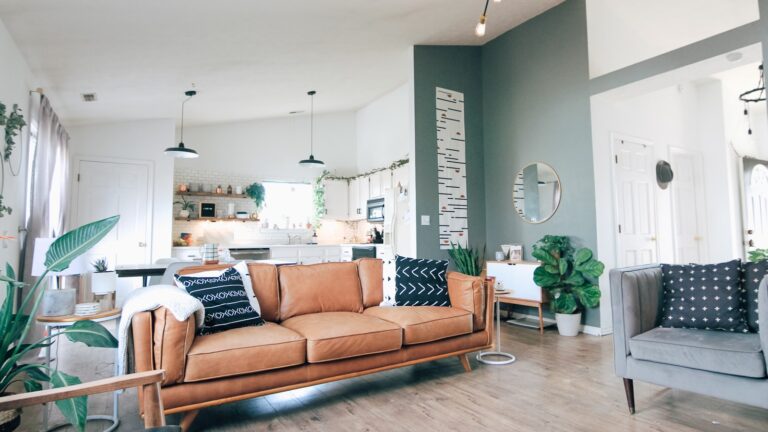
A compostable living home is one that gently returns its materials to the earth at the end of their life. Therefore, the choices we make about furniture, textiles, and daily objects shape what happens decades after we have finished using them. Reclaimed wood, natural fibres, terracotta, and unfinished cotton all decompose gracefully when their useful life ends. Synthetic materials, by contrast, often persist in landfills for centuries. In this guide, we walk through what a compostable living home looks like and where each natural material naturally fits.
What a Compostable Living Home Actually Means
A compostable living home is built around materials that biodegrade naturally without releasing toxic residues. Therefore, the goal is not zero-waste in the strict sense — it is closed-loop material flow. Each object enters the home as a natural material and eventually leaves it as compost, soil, or harmless biodegradation. As a result, the home participates in nature’s cycles rather than fighting them.
Additionally, a compostable living home is not about sacrifice. Most natural materials actually outperform synthetic alternatives in tropical Indian conditions. Reclaimed wood breathes better than laminate. Cotton breathes better than polyester. Terracotta cools better than plastic. Consequently, the choice is environmentally sound and practically superior at the same time.
Reclaimed Wood as the Foundation
Reclaimed wood sits at the foundation of any compostable living home. Therefore, large furniture pieces deserve first attention. A reclaimed sheesham dining table replaces a melamine-laminated alternative. A reclaimed teak wardrobe replaces a particleboard one. As a result, the largest objects in the home are also the longest-lasting and most naturally biodegradable.
Moreover, when reclaimed wood eventually reaches the end of its furniture life decades later, it composts down naturally. Although that may seem far away, the long-term thinking matters. For more on choosing salvaged Indian timber, see our reclaimed wood buying guide.
Natural Fibres Throughout the Home
Cushions, throws, curtains, and rugs all contribute to a compostable living home. Therefore, choose materials that biodegrade naturally. Pure cotton, linen, wool, jute, and silk all return to the soil within months or years of disposal. Synthetic blends, on the other hand, can persist in landfills for hundreds of years.
Furthermore, natural fibres are often more durable than blends despite the common assumption otherwise. High-quality khadi, handloom linen, and hand-loomed wool dhurries last decades when cared for. As a result, the home’s textile inventory contributes less to the disposal stream over time. Our piece on sustainable Indian textiles covers the specific fabrics that work best.
A compostable home does not refuse the future. It simply prepares its objects to return to the earth gracefully.
Kitchen and Daily Objects
Kitchens hold the highest density of small objects in most homes. Therefore, the kitchen is often the easiest room in which to make compostable progress. Wooden spoons replace plastic ones. Brass and copper containers replace plastic storage. Terracotta pots store water. Cotton kitchen cloths replace synthetic dish towels.
Moreover, food scraps themselves can become compost in any home with even small outdoor space. As a result, the compostable living home extends from the dining table out to the garden in a real, functional cycle. Indoor composting bins also work well for apartment-dwellers who want to participate without outdoor land.
Personal Care and the Compostable Living Home
Bathrooms hold an enormous amount of small synthetic items. Therefore, even modest swaps make a meaningful difference. Bamboo toothbrushes replace plastic ones. Loofahs replace synthetic body scrubs. Cotton bath towels replace microfibre alternatives. Wooden hairbrushes and combs replace plastic ones.
Although individual items seem small, the aggregate impact across years is significant. Most personal-care items are replaced every six to twelve months — therefore, every replacement decision either reinforces the compostable cycle or breaks it. Our piece on plastic-free Indian homes covers parallel transitions.
The Quiet Economics
Compostable living can feel expensive upfront, but the long-term cost is often lower. Therefore, the comparison should always be made on a per-year-of-use basis rather than purchase-price alone. A reclaimed wood dining table that lasts 60 years is dramatically cheaper per year than a synthetic table replaced every decade. Hand-loomed wool dhurries outlast synthetic carpets by decades.
Additionally, compostable households generate far less waste over time. Garbage bills, replacement-furniture costs, and disposal effort all decline. Consequently, the financial picture often improves once the transition is complete, even if the initial purchases feel expensive.
Frequently Asked Questions About a Compostable Living Home
How long does a compostable living home transition take?
Most families transition gradually over two to four years. The slow pace allows thoughtful purchases rather than reactive replacements.
Are all natural materials compostable?
Most are, but some natural materials with synthetic finishes (waxed cotton, polyurethane-sealed wood) are not fully compostable. Choose unfinished or naturally finished materials when possible.
What happens to the wood at end of life?
Solid hardwoods like reclaimed teak and sheesham biodegrade naturally over years when buried or composted. Smaller pieces decompose faster than larger ones.
Where should I begin?
Start with replacement decisions. Each time something needs to be replaced, choose the natural-material option. The home transitions gradually without major upheaval.
Final Thoughts: A Home That Returns Itself
Ultimately, a compostable living home is not about purity or sacrifice. It is about choosing materials that participate in nature’s cycles rather than fighting them. Reclaimed wood, natural fibres, brass, terracotta, and unfinished cotton all eventually return to the earth gently. Together, they create a home that does not just shelter its inhabitants today — it prepares to leave the smallest possible trace when its work is done.