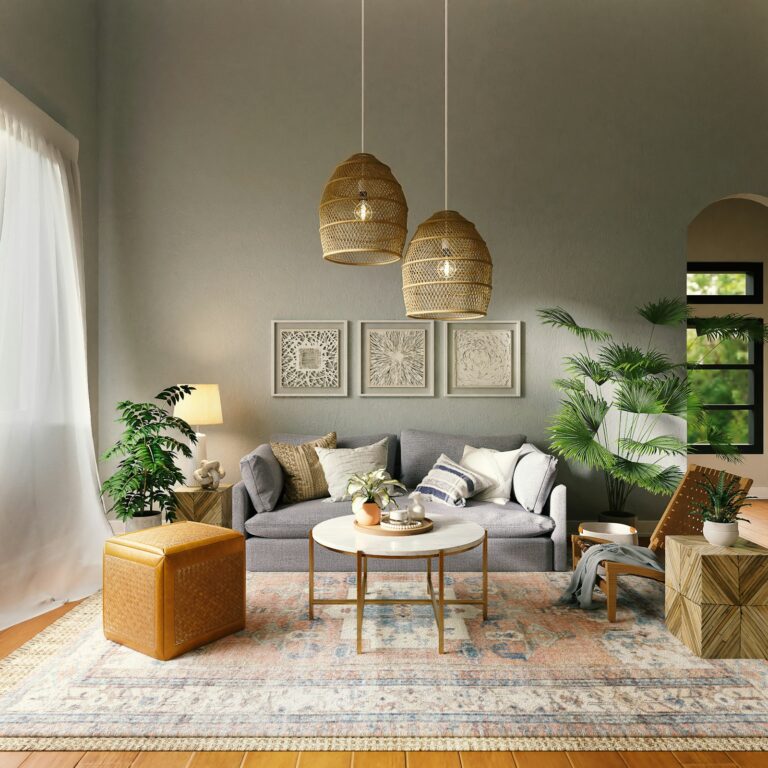
If you stand in the middle of any modern Indian or Western living room and slowly count the pieces of plastic you can see, the number is usually surprising. However, the lampshade frame. The remote. Also, the cable cover. The poly-blend cushion fill. Moreover, the fake-leather sofa skin. The acrylic frame on the artwork. Furthermore, the synthetic curtain lining. The polyester rug. In fact, none of it is necessarily bad on its own, but together they form a quiet, almost invisible plastic membrane around modern domestic life. Building a plastic-free, slow living home is, at heart, a slow act of unwrapping that membrane — not perfectly, not overnight, but room by room, decision by decision, with reclaimed wood and natural materials at the centre.

What Is a Plastic-Free Slow Living Home and Why Does It Matter?
However, a plastic-free slow living home is a household consciously built around natural, biodegradable, and long-lasting materials — wood, cotton, linen, hemp, wool, jute, ceramic, glass, metal, leather — with plastic relegated to genuinely necessary roles like electronics, certain appliances, and safety items. Indeed, the “slow” part is just as important as the “plastic-free” part. The goal isn’t a panic-driven, single-weekend overhaul. Additionally, the goal is a slow, mindful drift over years toward a home that quietly stops generating plastic waste in the background.
Why this matters: the average home generates an enormous quiet stream of plastic waste even when no one notices, and that waste compounds with the global furniture industry’s contribution to deforestation — about 15 billion trees a year. Meanwhile, plastic-free, slow living combines two of the most consequential household sustainability levers: reducing fossil-fuel-derived material consumption (plastic) and reducing virgin-tree consumption (fast furniture). Done together, they produce a home that is genuinely lighter on the planet without feeling like a sacrifice.
The Hidden Story Behind a Plastic Living Room
As a result, most plastic in a modern home doesn’t arrive as bottles or bags. Notably, it arrives as material substitutions. The “wood” cabinet is actually MDF wrapped in plastic veneer. Crucially, the “leather” sofa is polyurethane on a plastic mesh frame. The “wool” rug is acrylic. However, the “linen” curtains are polyester. Each substitution is a small price-driven decision by a manufacturer to use plastic instead of the natural material the eye expects. Also, stacked together across a household, these substitutions account for a remarkable percentage of the plastic in your home, almost none of which is recyclable when the items eventually fail.
The other half of the story is durability. Moreover, plastic-based furniture often has a built-in failure point — a hinge, a frame joint, a stitched seam — that breaks within five to ten years and cannot be repaired. The piece goes to a landfill, and another forest is felled to grow the plantation timber for the replacement. Furthermore, a plastic-free slow living home interrupts both halves of this story at once: less plastic in, fewer trees down.

The slowest path away from plastic is also the most permanent: replace nothing until it fails, and then replace it with something that will outlive you.
How a Slow Plastic-Free Home Actually Comes Together
In other words, the crucial principle of slow living is: never throw out something you already own simply because it’s plastic. In fact, the most environmentally damaging move is to fill a landfill with otherwise functional items in pursuit of a plastic-free aesthetic. Instead, the slow approach replaces things only as they wear out — and chooses non-plastic alternatives at that point. Indeed, over five to ten years, the plastic in a home gradually retreats. The reclaimed wood, the linen, the brass, the ceramic gradually arrive. Additionally, nothing is wasted, and the transition costs almost nothing extra spread over time.
Anchor pieces — the dining table, the bed frame, the wardrobe, the sofa frame — are the highest-leverage upgrades. Meanwhile, replace each one with reclaimed solid wood as it fails (or as you next move) and you have eliminated the largest plastic-or-composite items in the home. Layer in natural cotton sheets, linen curtains, jute rugs, ceramic tableware, and metal lighting fixtures over time, and the home gradually transforms without any single dramatic moment.
Quick Tip: Apply the “next-purchase rule” — starting today, every new item you bring into your home must pass the natural-material test. Just that one rule, applied consistently for five years, transforms a house quietly and without waste.
Indian Craftsmanship and the Soul of a Plastic-Free Home
Indeed, india is a remarkable place to source materials for a plastic-free slow living home. Notably, the country has one of the deepest living traditions of natural-material craftsmanship anywhere on earth. Reclaimed sheesham furniture from Jodhpur. Crucially, hand-block-printed cotton from Rajasthan. Pure cotton dhurries and hand-woven jute rugs. However, brass and copper utensils from Moradabad. Terracotta from Bishnupur. Also, hand-thrown ceramic from Khurja. Most of these crafts have been continuously produced for centuries in materials that are inherently biodegradable, repairable, and beautiful.
Sourcing from these traditions does two things at once. Moreover, it reduces the plastic content of your home, and it actively supports artisan economies that are quietly threatened by the rise of cheap plastic alternatives. A plastic-free slow living home built around Indian craft is, in a real sense, an act of cultural preservation alongside an act of ecological stewardship. Furthermore, the two are inseparable.

How to Build a Plastic-Free Slow Living Home — A Practical Guide
- Start the next-purchase rule today. Nothing new enters your home unless it passes the natural-material test. This single habit reshapes the home over years.
- Replace anchor pieces only when they fail. Choose reclaimed solid wood for dining table, bed frame, wardrobe, sofa frame. The rest of the room organises around these.
- Switch textiles slowly. As cushions, curtains, and rugs wear out, replace with cotton, linen, hemp, wool, jute. Polyester ages badly anyway.
- Choose ceramic, glass, and metal in the kitchen. Replace plastic storage as it fails. Glass jars, ceramic crocks, and brass tins last decades.
- Look for hand-made over machine-made where possible. Hand-made objects almost always use natural materials and last longer.
- Repair before replacing. Sew a torn cushion. Re-oil a worn table. The slowest furniture is the one you keep.
- Source locally where you can. Local craft means less shipping plastic and stronger artisan economies.

A Slower Home Is a Quieter Promise to the Forest
Notably, five years from now, the living room you are sitting in could look almost identical — same shape, same warmth, same comfort — with a quiet but radical change underneath: nothing in it is plastic anymore. In fact, the wood is reclaimed. The textiles are natural. Indeed, the lighting is metal. The artwork is on cotton paper in a wooden frame. Additionally, none of this happened in a single dramatic weekend. It happened slowly, decision by decision, every time something failed and was replaced with something better.
That is the most beautiful version of a plastic-free slow living home. Meanwhile, not a manifesto, not a project, just a house that quietly stopped producing plastic waste in the background and started ageing instead. The forest somewhere in central India that grew the wood is grateful. Notably, the artisan in Jodhpur who made the table is in business another year. And the room around you feels, for reasons you cannot quite name, lighter — because it is.
In Closing
Above all, a plastic-free slow living home is built one careful purchase at a time, around reclaimed wood and natural materials. Crucially, it does not require sacrifice or speed. It requires attention. However, the next time something in your house breaks, replace it with the slowest, most natural version of itself you can find. Repeat for a few years. Also, the home that emerges is, almost without effort, one of the gentlest possible footprints a household can leave on the planet.
Further Reading on Reclaimed Wood
Furthermore, several other journal pieces extend this story. Moreover, our category archives offer different angles on reclaimed living. Meanwhile, the buying guides simplify your next purchase, and the nature-design pieces show how to use the wood well in your home.
- Where Reclaimed Wood Really Comes From — the salvage chain in detail.
- How to Spot Fake Reclaimed Wood — seven honest tests.
- Sheesham, Mango or Teak buying guide — choose the right hardwood.
- The Slow Furniture Movement — buying less, buying better.
- 10-Year Reclaimed Wood Care Guide — oils, beeswax, patience.
Additionally, the editorial images on this site come from Unsplash, where photographers share their work freely. Likewise, you can browse Reclaimed Roots by topic from the main journal or jump directly to a category.